Showing posts with label real food. Show all posts

Thursday, October 01, 2009

Bites of summer

For those of us in the Midwest, summer has faded into autumn. My basil is still green and beautiful despite the cooler temperatures, and the piles of tomatoes gathered from the gardens still beckon to be savored.


This calls for just 3 simple ingredients:
  • Mozzarella cheese
  • Tomato
  • Basil leaves
For added flavor, you may want olive or balsamic oil and a touch of sea salt and pepper.

The smaller, gourmet mozzarella balls are preferred. I also like to use grape or cherry tomatoes.

Layer the ingredients however you prefer. I like to make them into bite size portions, place them on a large platter, then drizzle with oil and sprinkle with salt.


A simple and absolutely scrumptious burst of pure summer in your mouth!

When cooler temperatures hit, you can adapt a cozier version of this recipe by placing tomato and mozzarella on a slice of french bread, toasting briefly in the oven, then adding a fresh basil leaf before serving.

Monday, July 06, 2009

Coconut & Lime Rice Pudding

Usually when I think of rice pudding, I think of a comforting, wintertime food. Not so with this scrumptious take on an old favorite! The lime gives it just the right touch for a summertime treat.

Coconut milk is full of the healthy kind of fats, namely lauric acid, which is needed for brain development and strong bones, making this a particularly good recipe for children and pregnant or nursing mothers.

I used coconut milk for the entire milk amount. I love the subtle flavor, but if you want less of a coconut taste, just use regular milk for half. I have found that I prefer the refrigerated coconut milk that comes in a carton over the canned coconut milk, but either will work beautifully. I used the So Delicious brand.


Coconut & Lime Rice Pudding

  • 1/3 cup white rice
  • 3 1/4 cups milk
  • 1/3 cup raw sugar
  • 1/8 teaspoon salt
  • 2 teaspoons lime zest

Soak rice in cold water for 30 minutes. Drain.
In a saucepan, bring milk, rice, sugar and salt to a boil. Reduce heat and simmer about 45 minutes, or till thick and creamy, stirring occasionally.

Remove from heat and stir in lime zest.

Serve warm or chilled.

Tuesday, March 17, 2009

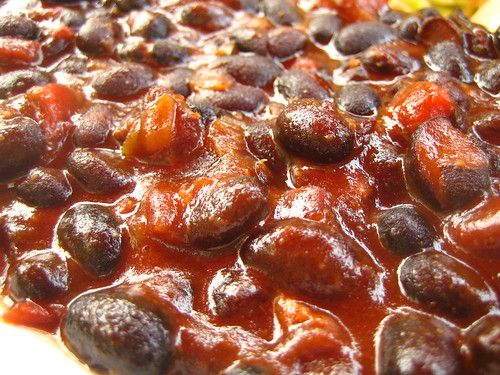
Baked Beans


I make these baked beans that I think are pretty good. I brought them to a wedding reception a while ago, BBQ themed, and a lot of other people seem too as well. They aren't as sweet as most of the store bought varieties. I'm always trying to duplicate the beans they make at this little BBQ and smokehouse place in Vancouver called Memphis Blues Barbecue House. The best. beans. ever! Oh, and the BBQ is good too.

Whenever someone asks me for the recipe I respond, "Oh, I just use the basic baked beans recipe from the More-With-Less Cookbook. And then I put in less molasses, use tomato sauce instead of ketchup, way more mustard and I add BBQ sauce and extra onions. And I use the crock pot." Then they look at me blankly and repeat their question, "Could I have the recipe?"

Apparently I didn't really give it to them after all. Well here it is. I shall try to record all of the changes that make it my recipe. You're welcome Barb.

Baked Beans

2 lb Navy Beans

4 qts water

Put in the crock pot and turn on low over night. *

In the morning drain, saving liquid.

Add 1/2 cup molasses

1 15/16 oz can of tomato sauce

1/2 cup prepared mustard

1 cup BBQ Sauce (without High fructose corn syrup of course)

1/2 cup red wine vinegar

5-6 dashes hot chili sauce

1 tbsp salt

1 tsp fresh ground pepper

1 large onion, chopped fine

1 tbsp minced garlic

2 bay leaves

Enough bean liquid to cover.

Stir together. Put lid back on crock pot and let cook on low for at least 4 hours.

Serve when ready.

Beans are very forgiving. If you taste it and think it ought to be sweeter, add more molasses. If you want it more tart, add more vinegar. Etc. You can adjust at the end if you need to. So tweak it until it's the way you like it. And then everyone will be asking you for your recipe.

* You can actually skip this step and cook it all together from the start in the crock pot, it just takes longer to finish then when starting with cooked beans. And you may want to soak them first.

**************
My friend Atara uses the basic recipe, she bakes it in the oven as intended. She puts a small ham in the middle and puts sauerkraut all over the top as it bakes. It tastes amazing. The ham is so tender when it's done. And the sauerkraut really compliments the flavor. I keep meaning to try this with my recipe to see how it turns out. At least the part with the ham.


photo by rick

Monday, June 30, 2008

Alternate Methods of Incubation for Yogurt

Here are a few variations in method for Making Yogurt. Using the oven is the easiest method for me. No mess, no fuss, no special equipment. But if your oven doesn't stay warm long enough to incubate yogurt you may want to try another method.

1.)You could use a cooler and hot water bottles or a heat packs. Put your yogurt jars in the cooler with the heat packs or water bottles. Close firmly. You can even put a thermometer in the cooler to help you monitor the temperature inside. This method would work well if you were camping as well and wanted to make yogurt. Or live somewhere without electricity.

2.) Speaking of camping and living without electricity...I've always been fascinated by this technique though I've not tried it. If you happen to have pack goats, which people have in South America I hear, and one of them is a milking goat, which would only make sense if they are accompanying you on a long trek, here is how you would make yogurt. At night, after milking the pack goat you would add culture to the still warm fresh milk, put it in a jar, put the jar in you sleeping bag at the foot and you body heat should keep it warm all night. In the morning you have yogurt for breakfast. One day I really want to try that one.

3.)I've successfully incubated yogurt in a sink full of warm water. Just make sure the jars are sealed tight. Use a thermometer and start with water slightly warmer than 110F because it will cool quickly. I used this method when I've had to run out of the house for a long time, usually over night, and for various reasons I started yogurt but didn't have time to finish it. The water incubates it long enough for the yogurt to set, and then continues to cool and eventually acts as a bit of refrigeration for the yogurt, keeping it fresh until I can return home and put it in the fridge. I also left the tiny window over my sink open so the water would cool at night. This wouldn't work in a heat wave however.

4.)You can purchase a yogurt maker. Most of these are a bucket lined with Styrofoam and a fancy label, but you can set them on you counter top and they do work. Others are fancier and have a heat source and places for bottles to rest. I don't personally think they are worth the expense but they may be helpful for some.

5.) My friend from Iran used to wrap her yogurt in a blanket and set it on her kitchen counter for the day. She probably still does.

I think you get the idea. Insulate, keep warm. If the oven method isn't working for you, you may find success with one of the other methods listed. Good luck.

Thursday, June 19, 2008

Making Yogurt-How to make Yogurt at Home

Okay, here's the thing you need to know about yogurt. It's really really easy. I tell you this at the beginning, before you read all about getting a thermometer and temperatures and bacterial process and all, because I was intimidated by yogurt for years. I would read the directions, in numerous books, and then put them down and relegate yogurt making to the someday when I have a lot of time to figure it out category in my head. I don't want you to do the same thing. So I'll say it again, making yogurt is simple.

Now, I'll probably be very long winded about making yogurt because I like to understand WHY things work. "Why mommy? Why?" I'm not that different from my 6 year old after all. "But why mommy? Why shouldn't I pee on my little sister in the bathtub? She's laughing."

Ahem.

Moving on.

Here's the other thing you need to know about yogurt. You will save a lot of money making it yourself. Say one gallon of milk is $3. One quart of good quality yogurt is usually $3-4 minimum. That means if you are buying yogurt you are paying $12-16 per gallon. If you make a gallon of yogurt guess how much it costs? That's right, $3, give or take the price of a gallon of milk. If you like yogurt, you really want to know how to make it yourself.

The first thing you will need is a pot large enough to hold the amount of yogurt you want to make. I don't recommend trying to do more than a gallon at a time. It takes too long to heat and burns on the bottom, and too long to cool. But you can start with less. You will have exactly as much yogurt as milk that you start with so you will need containers to hold them. My personal preference is glass mason jars. They seal nicely, don't leak, don't leech dioxins when they are warmed and look pretty. I went through a lot of plastic containers before I caught on. But you can use whatever you want. Really. It doesn't even need a lid. The picky among us may want a wire sieve, but that's completely optional.

So for you who like it laid out all neat and tidy instead of lost in the narrative, here's your list.

Equipment
Large Stock Pot or Sauce Pan (Heavy bottomed is best.)
Candy thermometer (Can be found in the baking section of every grocery store chain in North America I think. But I'll tell you what to do if you haven't got one too. Yogurt makers have been going by feel for centuries.)
Storage Containers
Wire Sieve
Whisk or spoon for stirring

(See that jar with a bit of yogurt in the bottom? That's
from my last batch, to use to start this one.)

Ingredients
Milk (Whole, Skim, and every thing in between. Personally I think whole milk tastes better and makes creamier yogurt, but low fat will work just as well.)
1 tbsp of your favorite brand of plain unsweetened yogurt, as long as it reads on the side, "Active bacterial cultures".

And please tell me that your favorite yogurt doesn't have gelatin or cornstarch in it, because those people who make that slop don't know how to make yogurt. Well, they probably do, but they're cheating you into thinking that it's creamier with additives. Anyway, you could go out and buy a yogurt starter like yo-gourmet or the like, but it's a whole lot simpler to just use some yogurt you already have. Their instructions are way to complex in my opinion, though that's how I started.

Yogurt is a simple bacterial process, just like bread. You introduce the bacteria to the milk, get it nice and cozy so that the bacteria thrive and they eat their way through all of the lactose and in turn give you yogurt. Before you get all grossed out by that, consider that you have a lot of bacteria and microorganisms in your body right now and you want the stuff in yogurt in you, because it's good for you, and then the bad bacteria has less space to run around and eventually almost moves out altogether complaining about over crowding. So that's why you need a little bit of yogurt from somewhere else. It already has live bacteria in it for you to add to the milk.

The rest is just all about temperature. You get the milk hot enough to pasteurize it so that the only thing alive in it is the bacteria you want to grow and nothing else. Then you get it cool enough to not kill the bacteria and then keep it warm enough that they stay active until they have spread through out the yogurt. Got that? Good. Here we go.

Method

Pour the milk into the pot. Set the heat beneath the pot to medium/medium high. (There are those who will tell you that you should put it on low and stir constantly to keep from burning but those people don't make yogurt that often I don't think. Higher heat warms it faster before the stuff on the bottom starts to stick and burn.) Put the thermometer in the milk, it should have a clip for the side of the pot, and stay close by stirring from time to time.

The hardest part about making yogurt is keeping the milk from burning. It takes so long to heat up that you have usually forgotten that you have anything on the stove and you have gone off to fold laundry or have a shower or something. If you get at all engrossed in movies, do not try to watch one while making yogurt. You will forget about it until it's boiling over the top and burnt on the bottom. Oh wait, that's just me? Never mind. Magazines are good. Yogurt making is a good time to read a magazine. On a chair or stool in the kitchen. Next to your milk. So you don't forget.

Watch your yogurt, stirring occasionally, until it reaches 180F, or 80C. If you have no thermometer, stand over it and watch until the outside edges are bubbling vigorously and there is a lot of steam coming off the milk.

Here's for the list people.

Method

Preheat oven to 110F. Or just set it on the lowest possible setting just when the light comes on, no more. Heat milk to 180F, 80C. Remove immediately from heat. Allow to cool to between 110-115F, about 54C. (Or if you have no thermometer, until you can hold your pinkie finger in the milk for a full 10 seconds without it burning.) Skim the skin off the top. Add the tbsp of yogurt. Stir together. Pour into storage containers. Place storage containers in the warmed oven. Turn the oven off. Wait 4 to 8 hours before opening. When the milk stays firm when the container is tilted remove from oven and place in fridge.

making yogurt

There you're done. That wasn't so hard was it?

Oh the sieve? That's for people who want a very smooth yogurt. You can pour the milk through it into the storage containers to catch any lumps.

NOTES:
I don't usually bother sterilizing my equipment. But I do try to get it very clean, rinsing in very hot water and soap just before I use it all. I don't want anything that isn't healthy bacteria growing in my milk.

Be sure to save a little bit of this batch of yogurt to use for starting your next batch.

For breakfast pair it with Muesli.

See also,

Alternate Methods of Incubation


How to "Rescue" Yogurt that Doesn't Turn Out

Greek Style Yogurt, and Making Yogurt Cheese

Thursday, November 29, 2007

Pantry Basics-Day Four and Gleaning Freegan Style

salvaged bread

I'll tell you what we ate today and how much it cost in a minute. First I'm going to tell you all about how I came to have all of these gigantic loaves of artisan bread on my table. It will make more sense perhaps if you go and read this post by No Impact Man called Teach a Man to Dumpster Dive, and Feed Him for Life. Be sure and watch the video too.

The idea of salvaged foods is hardly new to me. I shop at salvage grocery stores, I glean wild growing things, and I used to know people who collected salvage food, which is a euphemism for perfectly good food that would otherwise be tossed in a dumpster, and distribute it through food banks and shelters.

Last night I was walking the baby, and trying to get her to sleep with her cranky cold and happened to be walking past the front of Paniera (which is this great bakery restaurant chain) a little while after they closed. I saw a kid cart 4 gigantic bags to the dumpster and toss them in. Only they didn't look like garbage, they looked like bread. So I went a little bit closer and saw that there were two more bags sitting next to the door. So I asked him. "Is that bread?"

"Yeah."

I eyed the loaves through the double layer of clear plastic bags encasing them.

"Is there anything wrong with it? Is it edible?"

"Oh yeah it's fine, we throw out bread at least three nights a week because it's a day old."

"Do you have to throw it out? Like, will you get into trouble if you don't?"

"No. We used to have someone come and pick it up. But lots of times he doesn't come."

"Well, I'll take it." I said.

And then I tried to pick up a bag of bread to carry home on the stroller and almost broke my back. It was really heavy. There was no way I could get it home.

So I grabbed a smaller bag of pastries and told him I'd be back.

I walked the 6 blocks back to our house and told the GH to grab the car and head over to get some bread. By the time he got there the place was locked up and there were no bags so he checked the dumpster and found a large bag of bread, sealed of course, sitting right on top. So he grabbed it and brought it home.

Those brown loaves in the middle are $8 loaves of bread. They are larger than a newborn, heavier too. Those baguettes are all whole wheat. This bread is made without preservatives and all of the unhealthy additives in most grocery store loaves, which is why they throw it out every few days. Think about how long bread sits on the shelves at the grocery store. Paniera is an artisan bakery that makes top quality stuff. I now have over $100 worth of gourmet bread that was baked fresh yesterday morning in my house. I put as much as would fit in the freezer. We're eating some before it goes bad, and the rest will go to family, friends, and whomever else wants it. The thing is, there were 5 other bags of food that were tossed last night, by that one store. The mind boggles to think of how much food is wasted every day across this nation.

I'm going to do some research and see if there is a place near by that would be willing to distribute it if we were to pick it up, like a Food Bank. Now I wonder what's in the trash behind the grocery store.


Okay today's menu.

Scrambled eggs-We get a dozen large for $1.19 at Trader Joe's. I used 5. $0.50
Whole grain toast-free
butter-$0.30
persimmons-free
apples-$0.70
bananas-$0.39

Breakfast $1.89

Snack-Yogurt with nectarine jam mixed in, about 1 tsp per bowl. $0.60

Lunch

bread for lunch

Peanut Butter on thick slabs of bread with spinach and oranges on the side. (That combination is on purpose. The vitamin C in the oranges helps the body absorb the iron and nutrients in the spinach.) After I shot this picture I decided to add sliced bananas on top of the peanut butter.

Bread-free
Peanut butter-$0.40
Spinach leaves-$0.30
1 orange-$0.10
1 banana-$0.15

Total cost of lunch $0.80

For dinner I made corn tortillas, without a tortilla maker. I don't recommend it. It's time consuming and the tortillas don't hold together very well. This is my third attempt and they still aren't turning out well. I'm keeping my eyes open for a thrift store tortilla press, but no luck so far. When I consider that I can get 100 tortillas for less than 5 dollars around here and the bag of flour was about $3, this is one item that I'm not sure is worth it to make at home. Though it did taste wonderful.


I soaked black beans over night and then cooked them all day in the crockpot with onion, garlic, cumin, salt, pepper, habanero sauce, and oregano.

I removed about half of the beans from the pot with a slotted spoon, sliced some mini peppers I found hanging out at the back of the fridge, and added the leftover corn from last night, sprouts, yogurt, instead of sour cream, and salsa. We had vegetarian tacos, and used up leftovers at the same time.

16 corn tortillas-$0.50
black beans cooked from dried-$0.50
yogurt-$.20
sprouts-$0.30
corn-already added up last night
peppers$0.80?
Salsa-$0.30

Total cost of dinner $2.60

Total cost for the day $5.89

Saturday, November 24, 2007

How to Make Soup Broth

One of the simplest ways to make the most of your meat dishes, and leftovers, is to turn it all into soup. But I don't want to assume that everyone knows how to do this so I'll lay it out step by step.

Take the bones from your meal, be they turkey, chicken, ham, or beef, or even shrimp shells or fish heads. Save the drippings from when you roast and bake as well. (Pour the fat off, or skim it off once it cools.) Put them in a large stockpot, or crock pot. Cover with water.

Simmer on low heat for at least 8 hours. If you are using a stock pot make sure you add more water every few hours so it doesn't dry out and burn. The longer you simmer, the stronger the flavor in your soup stock.

Once the broth is to your liking, remove it from heat and pour into another pot or bowl through a strainer. Once the bones have cooled a little, you can sort through them for meat scraps and add them to the broth. You'd be surprised how much meat can be there.

Discard the bones and use the broth in you favorite soup recipe. Add chopped vegetables, potatoes, meat, rice, beans, barley, whatever you have in the fridge that should be used soon.

TIP: When making soup add things according to their cooking time. If you add dry beans and carrots at the same time, the carrots will be mush long before the beans are cooked through. Wait to add the carrots until the beans are almost all the way cooked. The same goes for everything else.

Variations: To give your broth more flavor, you can add a quartered onion, crushed garlic cloves, chopped celery, crushed chilies, shrimp shells, whatever you want, and add it to the stock when you are cooking it. This adds more flavor. Keep in mind that you will discard these with the bones.

Vegetable soup: Use onions, celery, carrots, turnips, leeks, etc., to make broth. You can puree them all together after in a blender to make a really tasty creamy vegetable soup, or drain and keep the broth only.

Thursday, November 08, 2007

Favorite Foods

Indulge me, I have to post today, but I don't have time to upload the pictures to go with the recipe I had planned to share. I was feeling a little bit homesick, like cold snowy Canada homesick, homemade cookies and grandma's chicken dinner homesick. I'm planning on making my mom's butter tarts this year for the first time. Because they're my favorite holiday recipe and I want to share it with my kids. One bite transports me to every new year in my memory.

So I want to hear from you. What's your favorite holiday food. What evokes memories of people living and passed, and the warm memories of families together.

I've already told you mine, add to that baked apples over a winter fire.

I'm fascinated by the way food speaks to our hearts as well as our stomachs, how certain scents feel like home, or take us to far away exotic places, or bring back memories of a special occasion.

Monday, November 05, 2007

Homemade Bread

Stephanie put me in touch with this wonderful looking blog a while back. It's really fun to read, and I bet the recipes taste good too. These people take bread seriously.


The thing about homemade bread is, no matter what the recipe, you are unlikely to encounter nearly as many additives as in standard store bought loaves. I've not seen a bread recipe that calls for corn syrup, but it's in every whole wheat loaf I look at at my local store. If you make your own bread with whole grains that makes it even better.

Once you get in the habit of making bread, like everything else, it's not really that hard, or time consuming. I have this really nifty, really expensive mixer that actually can knead bread. Since I started making bread once a week, I often don't even bother getting it out. It takes about the same amount of time to mix it by hand as it does to get the mixer out of the cupboard, and then wash it and put it away afterwards. So take a look. I plan to try the whole grain recipe soon.

Sunday, November 04, 2007

Soak Your Nuts: Healthier Protein with Sprouted Seeds

I wrote this article a while back as an assignment for a whole foods supplier. Only they never paid me, or got back to me, or published it, and I think they never actually launched the web portal I was writing for. So I'm publishing it here for the benefit of you my dear readers, and because I don't want them to publish it any more after being so unprofessional. I have of course edited out all references to said company and their products for obvious reasons. I actually tried this with almonds they were really good, I liked the texture. so here you go


Soak Your Nuts: Healthier Protein with Sprouted Seeds

Most everyone knows that nuts are good for you. They are an excellent protein alternative for those who are trying to eat less meat and they are packed full of nutrients and heart healthy monounsaturated fats that our bodies need. One of nature’s power foods, certain varieties of raw nuts are high in vitamin E, folic acid, calcium, copper, magnesium, manganese, phosphorus, and zinc, to name just a few. Nuts are also packed with protein and extremely portable. They are a staple energy food that humans have relied on for thousands of years. So the next time you are looking to increase the nutrient content of your breakfast, snack food, salad, health drink or even dinner, raw nuts should be one of the first things you think of. But how can you know if you are getting all of the touted benefits of raw nuts from what you may find available on your grocery store shelves? Did you know that it’s possible to make this natural super food even better?

Sadly most of the “raw” nuts sold in North American stores are far from fresh, and far from raw. A standard practice in the shelling of Brazil nuts for example is to soak them in water for 1-2 days and then boil them for 5 minutes to soften the shell which makes machine or hand cracking easier. The heat from the boiling kills the nut and by the time it has reached grocery store shelves it is not only no longer alive and no longer raw, it can be full of rancid oils as well, which are toxic for your body.

Raw nuts are as much a living food as salad greens or sprouts. Nuts are seeds. The whole food goodness that makes them such a wonderful addition to your diet is because of their properties as viable seed. For a seed, or nut, to be viable it must, given the proper conditions, be able to sprout and grow into another plant. To find nuts that are fresh and alive, search for nuts that are advertised for sprouting, or purchase local varieties, the kind sold in small batches at farmer’s markets. That way you can ask how the nuts are processed. I once bought 3 pounds of organic in the shell walnuts for $5 at a stone soup festival in the park. Failing that, buy nuts in the shell, and shell them while you watch TV at night, or while you’re talking on the phone.

Sprouting is a mini miracle when it comes to boosting the health benefits of seeds, nuts and grain. When a seed is soaked and begins to sprout it wakes up, in a manner of speaking, and releases the nutrients that are locked inside. Dormant seeds have in them something called enzyme inhibitors, which stop enzyme reactions. This keeps them from going bad longer, or sprouting in unfavorable conditions, but it also makes them difficult to digest. Once a seed is sprouted the enzyme inhibitors are gone and the nutrients are readily available as well as the beneficial enzymes. Sprouted seeds also increase in protein while decreasing in carbohydrates as the seed uses the carbohydrate energy stored inside to grow. Soaking also breaks down the glutens and hard to digest proteins into smaller and easier to digest components. Sprouted nuts become even more delicious and good for you than raw nuts. Sprouted peanuts are especially addictive.

Sprouting is a very simple process and has such great health benefits that it is worth trying.

Here is a simple sprouting method that can be done with readily available items from your own kitchen.

Equipment: Begin with a glass jar and a clean tea towel or cheesecloth. It’s a good idea to sterilize these first in boiling water with a bit of food safe hydrogen peroxide, or grape fruit seed extract.

Step 1) Rinse and Soak Place nuts in the jar and fill it with water. Only use enough nuts to fill about 1/3 of the jar. Sprouts need room to grow. Rinse the nuts two or three times and drain with a colander. Once the nuts are rinsed fill the remainder of the jar with cool clean water. Tie the tea towel or cheesecloth over the top of the jar with an elastic band, or piece of string, or a canning jar ring. Keep the jar out of direct sunlight and allow the nuts to soak. Most nuts should soak for 4-12 hours before draining. Do not soak them for too long or they will rot instead of sprout

Step 2) Drain After 12 hours drain the water. You can prop the jar at an angle upside down to allow all of the water to drain completely. The towel or cheesecloth will hold your sprouts inside. Once the nuts have soaked they are already awake and free of enzyme inhibitors. You can eat them now, or you can allow them to sprout longer. You should taste your sprouts every time you rinse them so you know what way you like them.

Step 3) Rinse If you choose to let them sprout longer, rinse and drain every 8 hours or so. Unlike some types of seeds, sprouted nuts will not develop a long shoot. They swell rather than sprout and only produce a little bulge at one end rather than a root.

Sprouted nuts can be eaten all by themselves as a snack food, or they can be added to salads, stir fried, and included in many other recipes.


Specific information on sprouting nuts was gleaned from The Sprout People article Sprouting 101 (http://www.sproutpeople.com/grow/sprouting.html) and from Thomas E. Billings’ article Sprouting: A Brief Overview (http://www.living-foods.com/articles/sprouting.html)

Information on Brazil nut processing is from Thomas E. Billings’ excellent article entitled WHAT A RAW-FOODER SHOULD KNOW ABOUT NUTS (http://www.living-foods.com/articles/nuts.html)

Tuesday, September 11, 2007

Making Biscuits the Old Fashioned Frugal Way

(First for my British readers, sorry I don't mean cookies, I mean the scone dumpling type things that we here in the New World refer to as biscuits.)
biscuits
Have you ever saved the fat from your cooking to make somethings else? Bacon drippings to cook eggs in for days, beef fat, chicken drippings? Not that long ago oil was too expensive for most people to buy and so they gleaned the fat the they used to cook from what they already had on hand. My mom did this while I was young and today I am going to pass this on to you.

Like all of my recipes, this one started as something else entirely. A few days before this I roasted a chicken in a crockpot. I made a rack out of potatoes, so what I really did was put a few potatoes underneath the chicken in the pot so that it wouldn't sit in the drippings. I put the chicken on top of them and rubbed it with butter and sea salt and ground pepper and fresh rosemary leaves. I was quite pleased with how it turned out, it was very tender and it actually turned a nice golden color. I cooked it on low for several hours. When it was ready there was all of this really ice broth in the bottom of the crockpot, and the butter and fat had been rendered as well. I chose not to make gravy and instead returned the uneaten chicken to the pot with some more water and cooked it overnight to make more broth. Then I strained the broth and picked all the meat from the bones. At this point I ladled all of the fat that I could skim from the top of the broth into a small bowl that I put in the fridge. Don't worry if you get some broth mixed in as well, it will separate after it cools.

Then I made soup.

soup

I added all the leftovers I had in my fridge. I had corn and brown beans and some chicken and basil sausage that I sliced and browned and added at the end. There was barley in there as well. And it lasted for two meals. For the first we had leftover bread from something else to go with the soup. Two days later I pulled it out again to serve for dinner and also pulled out the skimmed fat.

ingredients

I put about 2 1/2 cups of flour in the bowl, 2 tsp baking powder and a pinch or two of salt. I stirred it all together and added the fat from the bowl it comes out easily in one piece and cut it in like you would lard. until it was all evenly distributed. It comes out looking coarse and grainy but my picture of that is really dark. Those little bits in the fat are rosemary leaves from the chicken which added a really nice layer of flavor.


See how there is broth left at the bottom of the bowl, I just put that back in the soup.

broth


Then I added about one cup of warm water. Only add it a little bit at a time until it looks like this. If you add it all at once you may end up with too much and a wet dough.
dough


Then I shaped then with my fingers on a nonstick pan and cooked them at 350 for about half an hour, shorter if you make yours smaller than mine.
ready for the oven


And there you have it, a better tasting less expensive way to make biscuits.

Thursday, August 02, 2007

What Real Food Means to Me

Since the title of this blog is the real food revolution, I obviously have a few opinions on the subject. I was asked to write a post describing what real food means to me by these people here.

Real food can be defined many ways. For some it may mean home grown and cooked from scratch. For others it may be something attached to a nostalgic memory or event that had food involved. Though I do tend to think of real food in those terms I think its gets a bit more basic for me in the end. Real food to me is mostly about ingredients, while to a lesser extent about process.

In my opinion brownies should only ever have chocolate, sugar, butter flour and baking powder in them, unless you want to throw in caramel or fudge chunks, chili peppers, or something else that adds flavor and interest to the basic recipe. We live in a culture were boxes of mass produced snack foods call to us from grocery store shelves and announce in big bold print with exclamation points "Made with REAL chocolate!" Only it's also got "Canola Oil, Palm Oil, Nonfat Milk, Soybean Oil, Corn Syrup, Fructose, Whey, Salt, Modified Cornstarch, Gellan Gum, Sodium Citrate, Soy Lecithin, Natural And Artificial Flavors, Guar Gum, Xanthan Gum, Propylene Glycol Monoesters, Mono- And Diglycerides, Sodium Stearoyl Lactylate, and Potassium Sorbate (Preservative)." I don't even know what some of those things are.

It shocks me that people ever buy this stuff, it just doesn't taste the way brownies should taste. It tastes sickeningly sweet without any of the fine counterpoint that real butter and chocolate bring to each other and the lovely slightly crisp slightly chewy texture of a real brownie.

Real food is made from real ingredients, not manufactured additives. Real food uses fresh, delicious, simple ingredients and combines those to make something wonderful. Some of the best meals I have ever enjoyed are from the combination of 5 basic ingredients or less, but it is the freshness, the quality, and the treatment of those ingredients that creates a wonderful gastronomical experience. Simplicity in ingredients can be combined with simplicity of preparation, or elaborate and detailed preparations that create something truly special. Cake can be a flat sheet with delicious icing smoothed on top with a butter knife. It may not look like much, but it tastes delicious. That same cake can be arranged in layers and covered with elaborate icing and delicate sugar roses and become the center piece for an event, but what makes it real to me is the ingredients used to make it, not the way it looks.

A few shrimp can be arranged artfully on a skewer atop a carefully made risotto, or the same basic ingredient can be piled high on a plate with corn on the cob and French bread, drenched in buttery sauce. Both are experiences of real food, both memorable in their own way.

Real food is local, and unique, specialties made from the bounty of each region and passed on from generation to generation as an art that makes the act of survival in this place we find ourselves living pleasurable. It has the wisdom of our ancestors in it, and is our heritage.

Real food is made with pride, with an eye to quality and freshness. Real food is what we find the world over when people are in touch with their environment, their food sources, and their kitchens.

I started this blog because I was appalled at how little real food is available where I live. In the grocery stores and fast food chains that abound as I wander the aisles and look for nutritious and delicious things to feed my family, I am constantly disappointed by what I find. This has driven me to write about it, and learn more, to seek out local sources of produce, to start my own garden, and to even try to figure out how to make my own artisan sourdough. It is an exciting and fulfilling journey, and I'm glad that you all have joined me on it.

Thanks.
Related Posts with Thumbnails